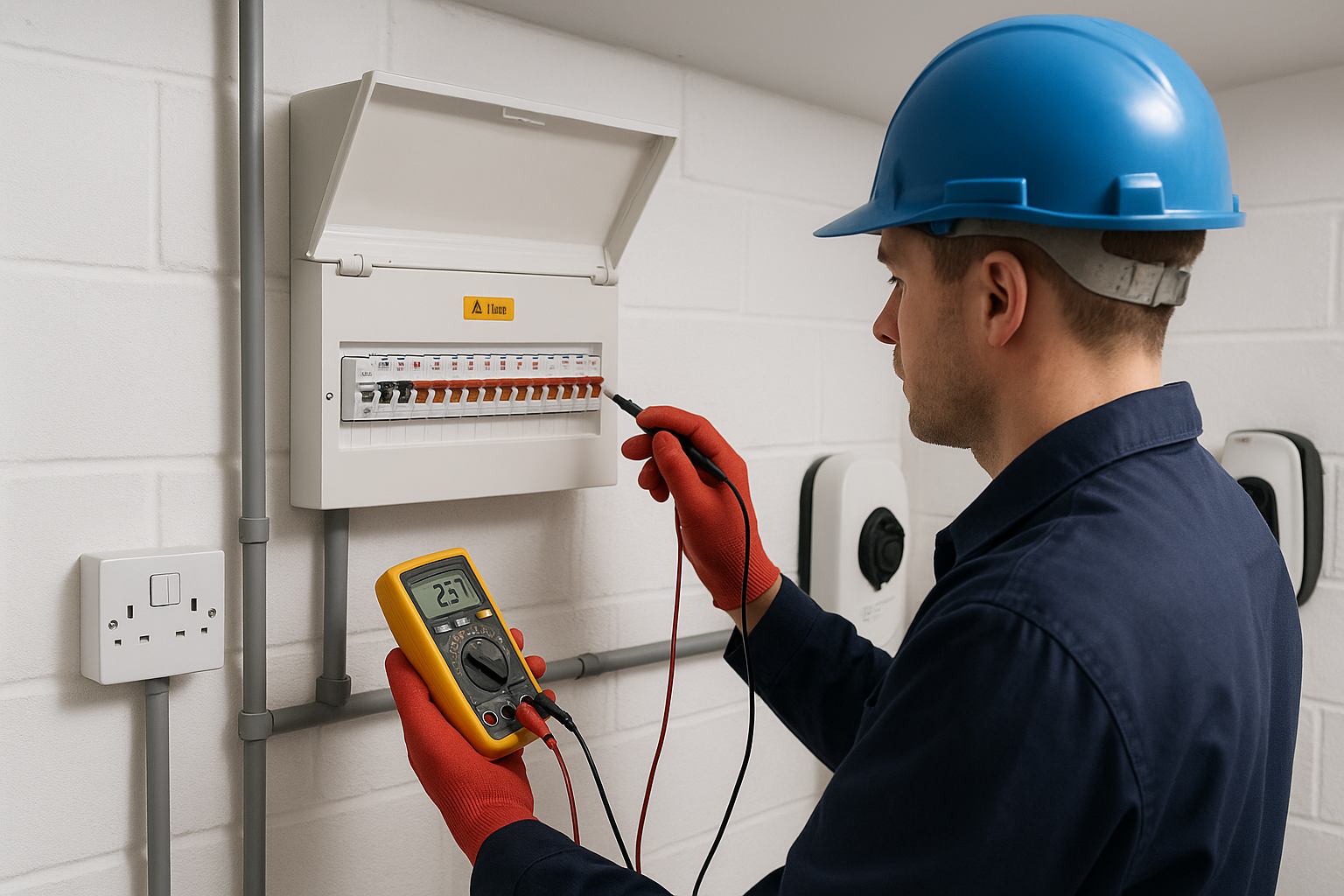
If your fuse box keeps tripping, a breaker will not reset, or you have a buzzing or hot fuse board, the safest next step is to switch off anything you can, keep clear of the affected equipment, and arrange a qualified electrician to inspect it. Bright Circuit Electrical Services provides fuse box repair in Abbey Wood for homes, landlords, tenants and property managers, with fault finding, tripping breaker investigation, RCD nuisance tripping support, faulty breaker replacement and fuse board safety checks.
These problems often show up in real homes across Abbey Wood and nearby areas such as Thamesmead, Plumstead, Woolwich, Belvedere and Bexleyheath. We regularly see faults in Victorian terraces, converted flats, older rewires, modern flats, shops and offices where the consumer unit, wiring age, damp, or overloaded circuits are causing disruption. A fuse box problem can be minor, such as one failed circuit, or it can be a warning sign of overheating, cable damage or a deteriorating board that needs urgent attention.
Our approach is practical and safety-led. We look for the cause of the fault, explain what is happening in plain English, and advise on the most sensible repair or replacement option. If your issue is limited to one circuit, that may mean testing and replacing a breaker or repairing a local fault. If the board is old, damaged or showing signs of heat or moisture, a wider consumer unit review may be the safer answer. Call 020 3670 4281 or email info@abbeywoodelectricians.co.uk to request a visit.
Because electrical faults can develop quickly, urgent signs should not be ignored. Burning smells, scorch marks, repeated tripping, buzzing from the consumer unit, visible damage, water ingress, or a breaker that feels hot are all reasons to stop using the affected circuit and get help. If the problem affects lighting, sockets or a whole floor, we can trace the fault methodically and advise whether repair, replacement or further testing is needed.
We work from 3 Chantry Cl, Abbey Wood, London SE2 9NX and support local customers close to Abbey Wood Station, the Elizabeth line station, Lesnes Abbey Woods, Southmere Lake and Plumstead Common. For many customers, the main concern is restoring power safely without guessing at the cause. Our service is built around that need.
Fuse Box Fault Finding in Abbey Wood
Fuse box fault finding is the starting point when the consumer unit is not behaving as it should but the exact cause is not obvious. In Abbey Wood, we are often called to properties where half the house has no power, a lighting circuit has failed, or the fuse box keeps tripping after a new appliance is plugged in. The fault may be in the board itself, but it may also be caused by a socket, light fitting, cable run, outdoor circuit, or damp affecting the wiring somewhere else in the property.
Common symptoms include intermittent power loss, breakers that trip without a clear pattern, a breaker that will not reset, flickering lights on one circuit, sockets that stop working after an appliance is used, or heat and noise from the board. In older homes, especially those with ageing cable or legacy boards, the issue may be linked to worn insulation, loose terminations, or a circuit that is no longer suitable for modern loads. In flats and converted properties, shared routes, altered layouts and previous repair work can make the fault less straightforward.
Our fault-finding process is focused on isolating the affected circuit, checking the consumer unit, and testing the wiring and connected equipment in a safe order. We use the information from the symptoms, the layout of the property, and the behaviour of the circuit to narrow down the problem. If the fault is linked to a specific appliance or accessory, we will explain that clearly. If the board itself is the concern, we will say so plainly and discuss the next step.
For landlords and property managers, this approach is especially useful when a tenant reports a loss of power but the cause is not immediately visible. We can assess whether the issue is local to one flat, part of a communal arrangement, or a wider electrical fault that needs a more comprehensive repair plan.
Tripping Breaker Investigation in Abbey Wood
A tripping breaker is the consumer unit doing its job by disconnecting a circuit when it detects a problem. The challenge is finding out whether the trip is being caused by overload, a short circuit, a faulty appliance, loose wiring, moisture, or a breaker that has become unreliable. If your breaker will not reset, trips repeatedly, or trips as soon as a particular device is used, it needs proper investigation rather than repeated attempts to force it back on.
In Abbey Wood homes, tripping often appears when several appliances are running at once, especially in kitchens, utility spaces and home offices. Portable heaters, kettles, washing machines, dryers and older extension leads can all contribute to overloading. In older properties, wiring may not have been designed for the number of appliances now used in day-to-day life. In modern flats, a fault may be more specific, such as a damaged socket, a problem with a light fitting, or a circuit affected by moisture from an external wall or bathroom area.
We investigate the breaker by checking the circuit load, reviewing the connected equipment, and testing the wiring arrangement to identify the trigger. Where necessary, we separate the issue into manageable parts so the customer can see whether the fault lies with a single appliance, a damaged accessory, or the circuit itself. If the breaker is failing mechanically rather than reacting to a genuine fault, replacement may be the correct solution after testing confirms it.
If the tripping is happening after recent DIY, a new kitchen appliance, garden lighting, or an extension to the property, that information is useful and should be shared when booking. It helps us focus the inspection and avoid unnecessary disruption. Never keep resetting a breaker repeatedly if it is tripping straight away; that can mask a serious fault and increase risk.
RCD Nuisance Tripping in Abbey Wood
RCD nuisance tripping is frustrating because it can interrupt power without an obvious pattern, but it still needs careful investigation. An RCD is designed to protect people from electric shock and reduce fire risk by disconnecting the supply when it detects an imbalance. If it keeps operating, there is usually a reason. That reason may be a genuine earth leakage fault, moisture, damaged equipment, or cumulative leakage from several appliances rather than a simple nuisance issue.
In Abbey Wood, we often see RCD tripping linked to damp in outdoor sockets, garden lights, kitchens, bathrooms, utility rooms and older external runs. Properties near open spaces such as Southmere Lake or homes with exposed external wiring can be more vulnerable to weather-related issues. Ageing cable, damaged appliances, and worn insulation can also create intermittent faults that only show up under load or when the weather changes.
Our approach is to identify whether the RCD is responding to a real fault or whether the circuit arrangement needs review. We check the condition of the consumer unit, inspect the connected circuit, and test the equipment and wiring in a structured way. In some cases, the answer is a straightforward repair to a failed accessory or damaged cable. In others, the issue may point to a circuit that should be reworked or separated to reduce leakage and improve reliability.
Customers sometimes assume an RCD that trips is just being oversensitive. In practice, repeated operation is often the system warning that something is wrong. If the circuit serves essential areas such as lighting or refrigeration, tell us what is affected so we can prioritise the inspection. For landlords and property managers, nuisance tripping can become a recurring callout if the underlying cause is not addressed properly.
Faulty Breaker Replacement in Abbey Wood
Sometimes the breaker itself is the problem. A faulty breaker may trip when it should not, fail to reset, feel loose, or show signs of wear that suggest it is no longer reliable. That said, a breaker should only be replaced after proper fault finding confirms that the circuit and connected equipment are safe enough for the new device to operate correctly. Replacing a breaker without identifying the cause can hide a more serious issue.
In Abbey Wood properties with older consumer units, breaker wear can be part of a wider ageing-board problem. In newer homes, a single breaker may fail after a fault event, water ingress, or repeated overload. We assess the condition of the breaker, the surrounding board, and the circuit it protects before advising on the repair. If the board shows broader signs of deterioration, a targeted replacement may not be the best long-term answer.
Where replacement is appropriate, we will explain the reason clearly and make sure the circuit is tested after the work. This matters for homeowners who want a safe, working system, as well as for landlords and property managers who need a clear record of what was found and what was done. If the breaker protects sockets, lighting or a dedicated appliance circuit, we will also check that the circuit is behaving properly once the issue is resolved.
Some electrical work may be notifiable under Part P of the Building Regulations depending on the scope and location of the work. If a wider upgrade is needed, we will discuss that before proceeding so there are no surprises.
Fuse Board Safety Checks in Abbey Wood
Fuse board safety checks are useful when the issue is not just one trip, but concern about the condition of the whole consumer unit. A board that is buzzing, hot, discoloured, cracked, loose, damp, or fitted with ageing components should be inspected promptly. A safety check can reveal warning signs before they become a bigger fault.
We look for evidence of overheating, poor terminations, water ingress, outdated fuse wire boards, damaged breakers, missing blanks, and signs that the board is struggling with the demands placed on it. In older Abbey Wood homes, especially those with older rewires or long-standing alterations, the fuse board may be one of the first places where wear becomes visible. In flats and mixed-use properties, access to the board and the condition of nearby wiring can also affect how safely the system operates.
Safety checks are also valuable after a fault has been repaired, because they confirm that the circuit is stable and that no secondary issues were missed. For landlords and property managers, they help create a clearer picture of electrical condition across the property. For tenants, they can provide reassurance when a board has been tripping or making noise.
If access to the consumer unit is awkward, let us know when you book. Many boards are in cupboards, under stairs, in hallways, or in meter locations where clear access matters. If the board is behind stored items or in a tight space, we may ask that the area is cleared before the visit so testing can be completed safely and efficiently.
We also provide related domestic and commercial support, including electrician callouts, emergency electrician visits, electrical repairs, consumer unit work, lighting installation, socket installation, electrical fault finding and domestic electrician services. Recent local jobs have included a consumer unit fault check in Belvedere, socket replacement in Bexleyheath, and an outdoor light repair in Thamesmead, showing the kind of practical work we handle across the area.
Bright Circuit Electrical Services is based locally and supports customers near Abbey Wood Station, Lesnes Abbey Woods, the Elizabeth line station, Southmere Lake and Plumstead Common. If your fuse box keeps tripping, you have a breaker that will not reset, or you are worried about an old fuse wire board, call 020 3670 4281 or request a visit today. We will assess the fault, explain the likely cause, and advise on the safest next step for your property.
Access note: please keep the area around the consumer unit clear, avoid touching damaged wiring or wet equipment, and turn off the affected circuit if you can do so safely. If there is burning smell, smoke, visible arcing or water near the board, treat it as urgent and call immediately.